Got a question? Get in touch.


Content
Project Overview
A private residential client needed a pocket door system for a newly configured ensuite where a standard hinged door would create severe spatial restrictions and interfere with the sanitaryware layout. The brief called for a solution that would remain dimensionally stable in a high-heat, high-humidity environment, while the surrounding pocket wall needed to support the dead load of heavy tiling on the shower side. We supplied the P7300 G pocket door system along with structural advice on reinforcing the pocket wall for a heavy wet side finish, working directly with the client's builder to align the door specification with the wider bathroom fit-out.
The Challenge
Ensuite layouts leave little room for compromise. Every fixture competes for space, and a hinged door swing often forces a layout that limits sanitaryware positioning or restricts movement within the room. In this case, a pocket door was the only configuration that allowed the ensuite to function as intended, sliding fully into the wall cavity rather than occupying floor area when open.
The environment introduced a second and less visible challenge. Sustained heat and moisture from the shower create the conditions for timber components to move over time, affecting alignment and long-term performance. A standard timber door leaf or frame would be exposed to this risk throughout its service life, with the potential for swelling, warping or finish damage in a room that never dries out completely between regular uses.
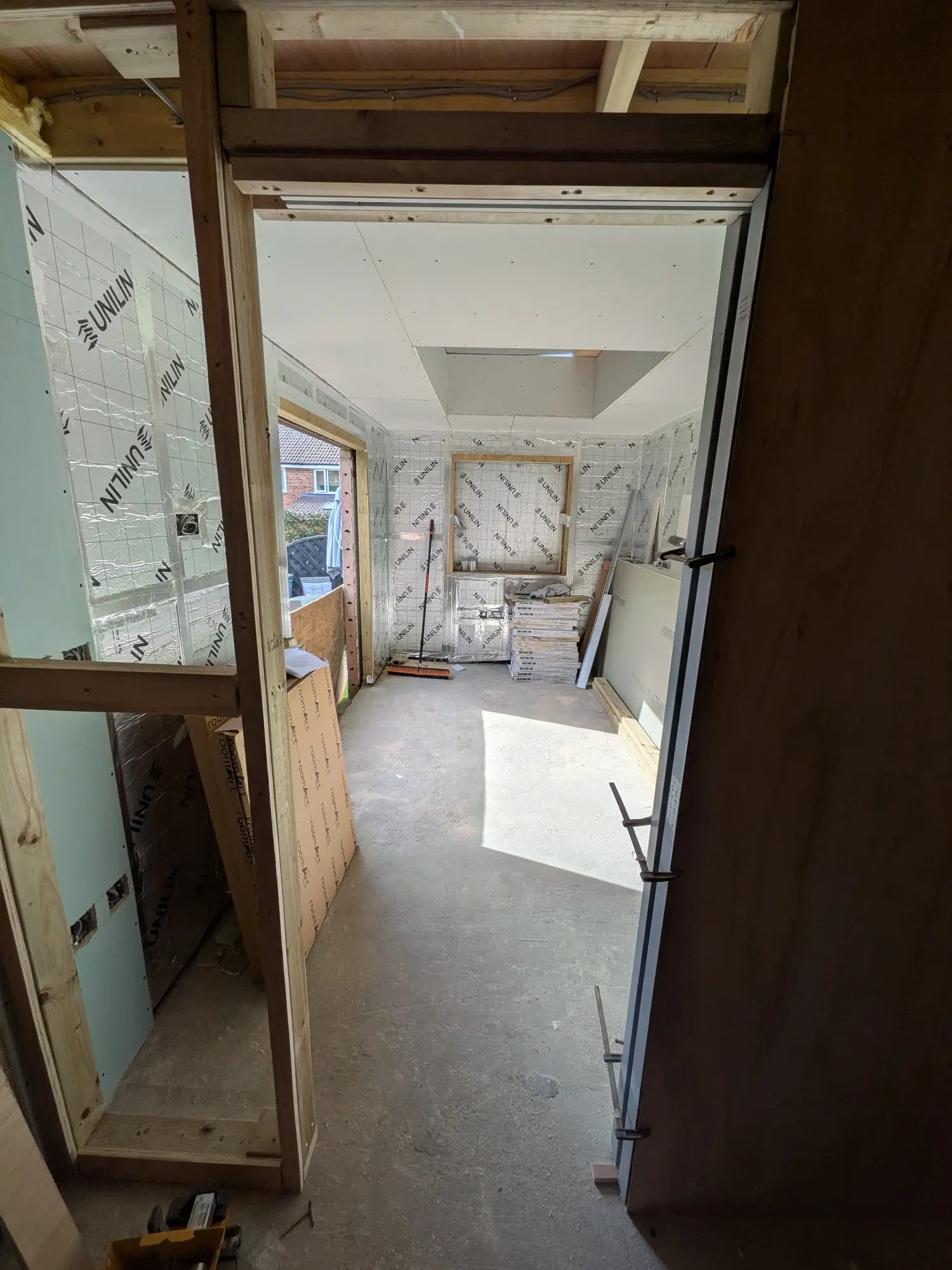
The pocket wall itself formed one side of the shower cubicle. This meant it needed to carry the weight of heavy wall tiles without compromising the structural integrity of the door cavity or interfering with how the door operates within it. A wall built to standard residential specification would not have had the capacity to take this load safely, and any structural weakness here would have been difficult and costly to correct once the tiling was complete.
The Solution
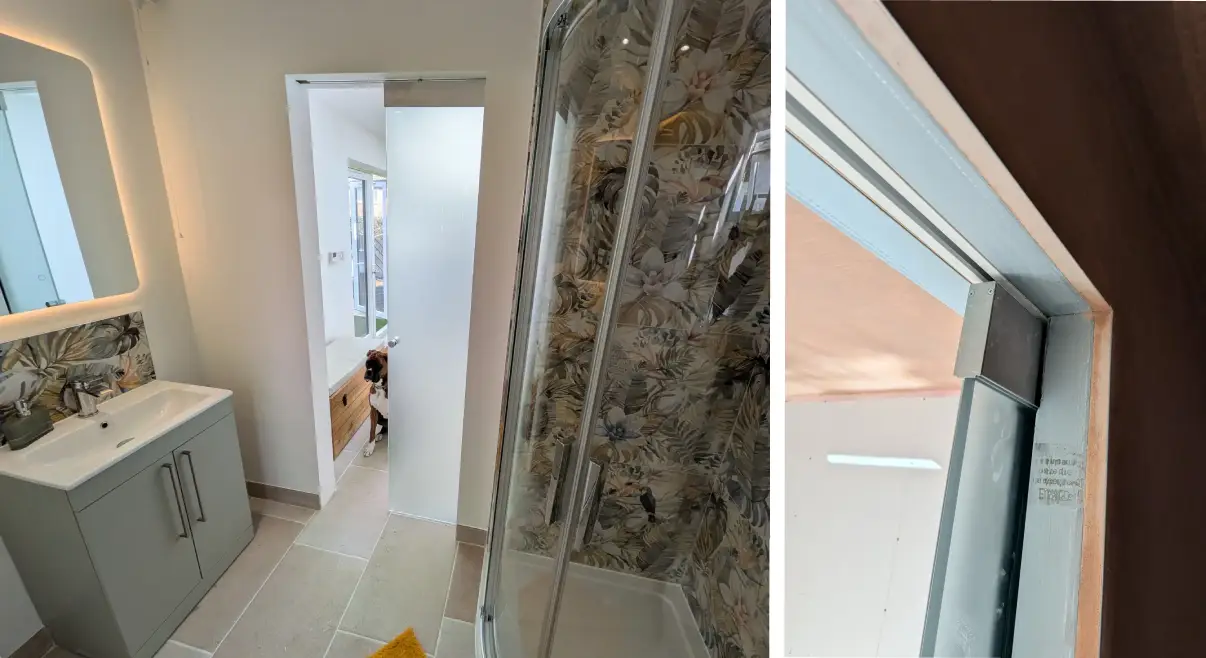
Portman specified the P7300 G pocket door system, which uses metal jambs paired with a fully glazed door leaf. Removing timber from the frame and leaf construction addresses the moisture risk directly. Metal jambs do not expand, contract or warp in response to humidity, so the door continues to operate within its intended tolerances regardless of conditions in the room. The glazed leaf keeps the ensuite feeling open despite the reduced footprint, without introducing a material that is vulnerable to the environment it sits in.
Performance in a wet environment is not determined by the door leaf alone. It depends on how the full system, wall construction and door configuration are coordinated from the outset. To meet the load-bearing requirement on the shower side, the pocket wall frame was reinforced with an additional plywood layer before AquaBoard was applied and the tiling installed. This gave the wall the capacity to carry the weight of the tiles without encroaching into the door cavity or affecting how the door travels along its top track.
The reinforcement and the glazed metal system were specified together, so that structural capacity on the wet side did not come at the expense of clearance or alignment on the door side. Coordinating these two elements at the specification stage meant the installer was working to a single integrated detail rather than resolving conflicts between structure and door operation on site, which reduced the risk of delays or rework during the fit-out.
The Outcome
The finished ensuite achieved the space efficiency and peace of mind the client was looking for, with no door swing to work around and no compromise on the sanitaryware layout. The P7300 G system removed the risk associated with timber movement in a humid environment, giving the client a door that continues to operate as specified over time rather than one that needs adjustment as conditions change with the seasons.
The reinforced pocket wall carried the tiling load without operational issues, confirming that the wet side structure and the door system can be designed together rather than treated as separate problems. It’s also a good example of how Portman can help resolve ensuite challenges, where the combination of moisture resistance and structural support is frequently required together and often considered too late in the design process.
Ultimately, this project demonstrates the importance of incorporating technical challenges at the design stage rather than treating them as an afterthought. It also illustrates a wider point about pocket door specification generally: the door leaf and the wall it sits within cannot be treated as unrelated decisions, particularly in demanding environments such as ensuites and wet rooms.
Get in touch with Portman Doors for technical help in similar challenging wet room and ensuite installations.